

[See forward by Harry Raduege, Jr]
[See workbook of 500 Day Planning Method]
Why a 500 Day Action Plan?
500 Day Plans
Enable broad project initiatives, aligning multiple activities to a central mission and vision
Allow focus for small and medium size tasks, yet is flexible enough to guide long term projects
Balances consistency with agility, replacing “1 yr, 3yr, and 5 yr” planning programs
Historical Examples
U.S. Central Command - Internal Focus
Enabled an enormous IT transformation required for the mission while being constrained by modest increases to annual budgets
Defense Information System Agency - External Focus
Coordinated the transformation of 21 major departments with important customers including the White House
Steps for Creating a 500 Day Plan
Establish organizational Mission, Vision, and Strategic Goals
Identify organizational objectives and stakeholder requests
Identify tasks for achieving objectives
Align task leaders by name
Task leaders propose definition, budgets, and timelines
Execute plan - leadership tracks and supports progress
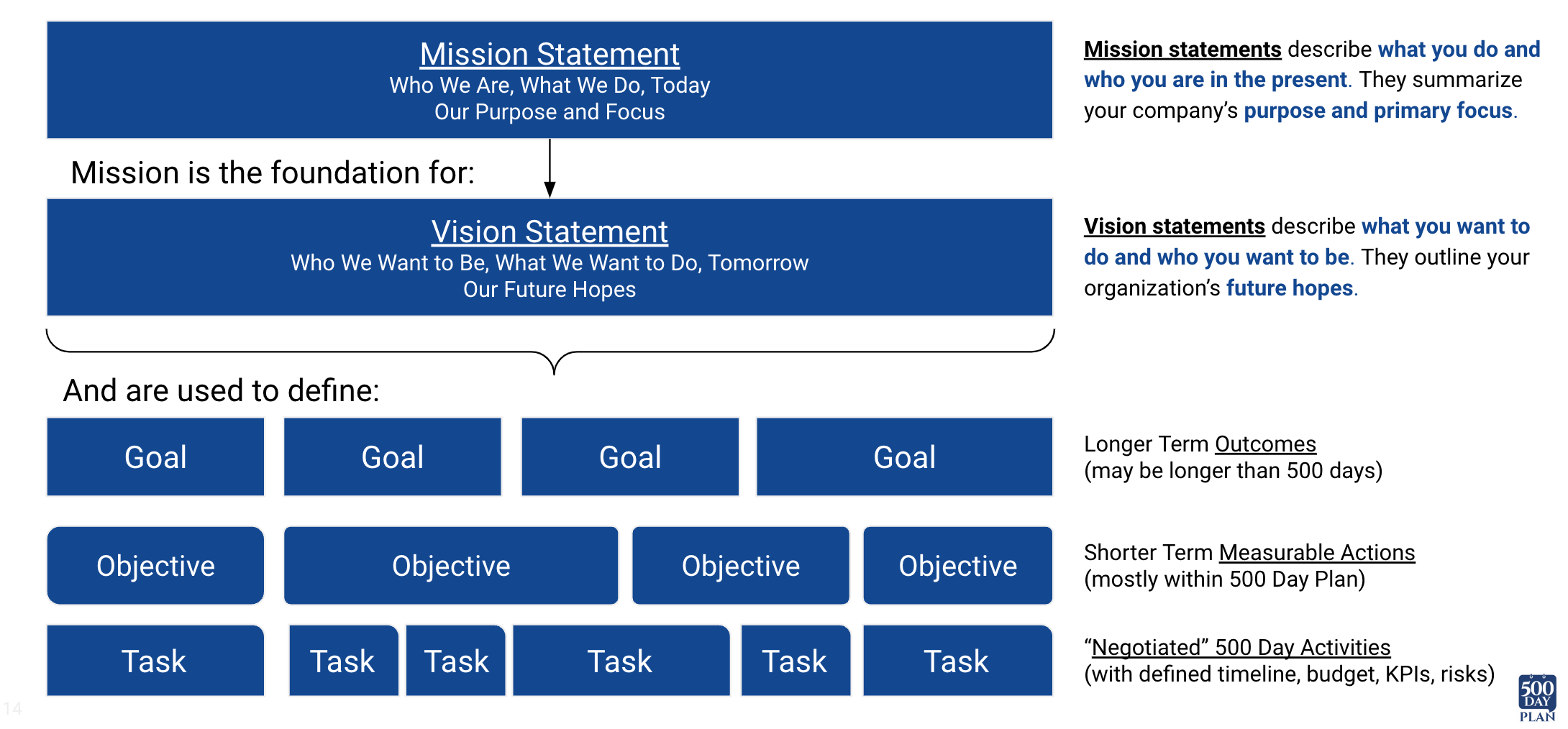
1.) Mission, Vision, and Goals
What:
The foundation of the plan
Senior leadership identifies organizational Mission statement
Published on page 1 of 500-Day Action Plan
Senior leadership identifies organizational Vision statement
Senior leadership team conducts Opportunities and Risks Assessment
Senior leadership defines Goals, outcomes needed to enable Vision
Vision and Goals published on page 2 of 500-Day Action Plan
Who:
Senior Executive Team
2.) Objectives and Requests
What:
Define Objectives; specific and measurable actions to achieve a goal
Identify customer requests as appropriate
Who:
Senior Planning Committee
3.) Identify Tasks
What:
Identify first version of tasks for achieving objectives
Tasks are resourced activities needed to achieve an objective
Build understanding and participation through mid-level mgmt leaders
Leadership throughout the organization participates
Who:
Senior Planning Committee Approved by Senior Executive Team
4.) Assign Task Leaders
What:
Identify task leaders by name
Designate responsibility, authority, and accountability
Task leaders collaborate on timeline, KPIs, resourcing, and will leverage the Task Negotiation Process to update the task definition
Ensure task leaders appreciate their importance
Who:
Senior Planning Committee
5.) Define Timelines and Resources
What:
Negotiate timeline for milestones or subtasks
Collaborate on resources, team, and budget requirements
Identify risks and mitigations to ensure realistic timelines
Negotiate KPI’s, Exit Criteria, list Terms and Conditions
Collaborate on final definition of task published in 500 Day Plan
Who:
Task Leaders, approved by Senior Planning Committee
6.) Execute and Manage Progress
What:
Document and communicate plan
Define and implement incentive plan
Implement management review process
Monitor risks and mitigations
Manage resources and organizational conflicts
Enable an agile task redefinition process
Who:
Entire team
6.) Balance Consistency with Agility
A 500 Day Plan will result in a well resourced, consistent focused effort to accomplish an important strategic vision, however, because changes can occur at any time, the execution of the plan must also enable agility.
Consistency:
500 Days enables broad organization coordination on highly strategic shifts
Budgets can be focused on the most important vision and goals
Consistent following of a defined strategy plan avoids the dangers of muddling-through each crisis, or allowing costly incrementalism
Agility:
However, environmental conditions can change at any time:
New threats or opportunities
New cost savings or cost increases
New technologies
Task execution must balance consistency with agility while avoiding feature creep and incrementalism.
Original but with Reference to: